I'll be running for board secretary of the German UPA
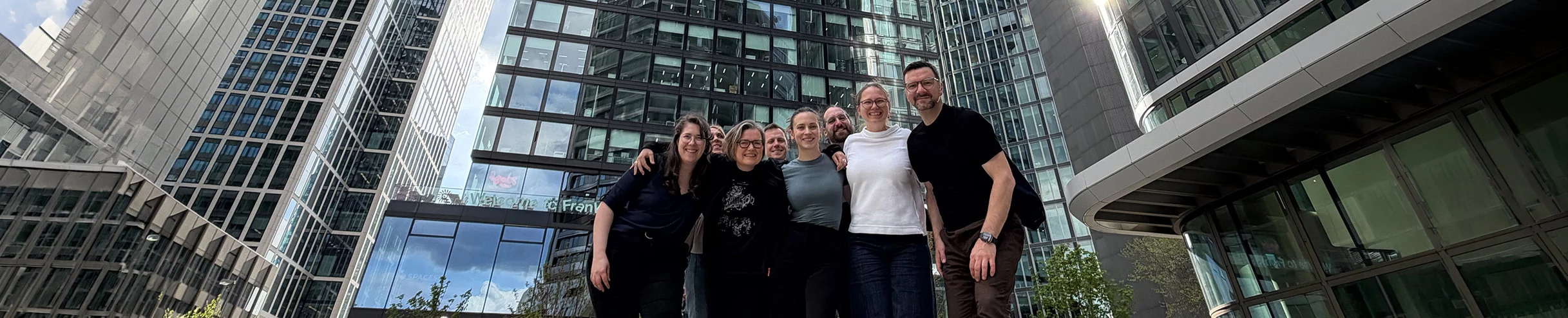
I was invited to the German UPA's strategy workshop in Frankfurt because I'll be running for board secretary. For me, it was mainly about understanding how strategic decisions come about within the association and what they're built on.
3 min read
How I grew into this role
A few weeks ago, I was in Frankfurt for the German UPA's strategy workshop. The occasion was closely tied to a decision I'd already made beforehand: I'll be running for board secretary.
This role has accompanied me for a while already, in a smaller capacity, since I already take on operational tasks as the secretary's aide. That naturally gives you a different view of how things work. You don't just see results, but also the paths leading there, the coordination, the small decisions in between. That almost automatically raised the question of how these decisions actually come about and what deliberations happen beforehand. That's exactly where the workshop became relevant for me, because it opened up that view.
The setting was prepared and moderated by Katja Busch. That showed clearly throughout, especially in how focused the conversations stayed.
Strategic topics often tend to either get concrete very quickly or stay vague for a very long time. We surprisingly managed to avoid both on that day. Instead of quick results, shared understanding was the priority, which gave the conversations a different kind of depth.
And yes, some discussions would probably have gone on much longer without this structure (😏).
What question was on the table
Fairly early on, the conversation turned to the future direction of the German UPA, and with it, to the question of who we want to consider more strongly in that development.
What mattered to me was thinking of people who are still at the beginning: young professionals, students, or people just starting to orient themselves. This is often where it's decided whether a profession feels accessible or off-putting.
At the same time, it became very tangible that every change touches existing structures. Things that work well today aren't automatically stable – they're the result of many decisions that have already been made.
These thoughts sat side by side in the room and shaped a lot of what followed.
Why we gave ourselves time
As the workshop continued, a shared direction emerged that deliberately feels slower than you might expect. Instead of formulating a vision that communicates well but doesn't yet have solid footing, the focus was on something else: building understanding, making connections visible, and grounding our own work more strongly in data.
That changes how decisions get made. It shifts the view from individual results to the conditions under which those results come about.
When we left the workshop, there was no finished sentence that could stand as a vision. Instead, there was a series of next steps that clearly build on each other and make sense. For me, this was a particularly meaningful decision, since in everyday work, decisions are often made too quickly and without data. Now we had the chance to lead by example.
What becomes visible beyond the organization itself
Beyond the concrete topics, a bigger question stayed with me: how is the relevance of our profession developing, and what influence do we as a community have on that?
When people get involved earlier, access to the profession changes noticeably. Exchange happens differently, barriers become visible earlier, and knowledge spreads more broadly. These effects can't be measured immediately, but over time they set a clear direction. Especially given how quickly our industry is changing through AI, bootcamps, online courses, and new learning formats, this creates a responsibility that can't be reduced to individual initiatives.
An article I read a while back described exactly this development and helped me put a lot of the thoughts from the workshop into perspective again.
"Why is the UX job market such a mess right now" by Jared M. Spool
Closing
The exchange in Frankfurt made a lot of things more tangible for me that had previously felt abstract. That wasn't just because of the content, but above all because of the openness in the conversations and the willingness to take time for the right questions.
My thanks go to the board for their trust, and to Katja Busch for the moderation that made this setting possible.
I'm looking forward to the next steps and to continuing to help shape this process. 😊🤝